
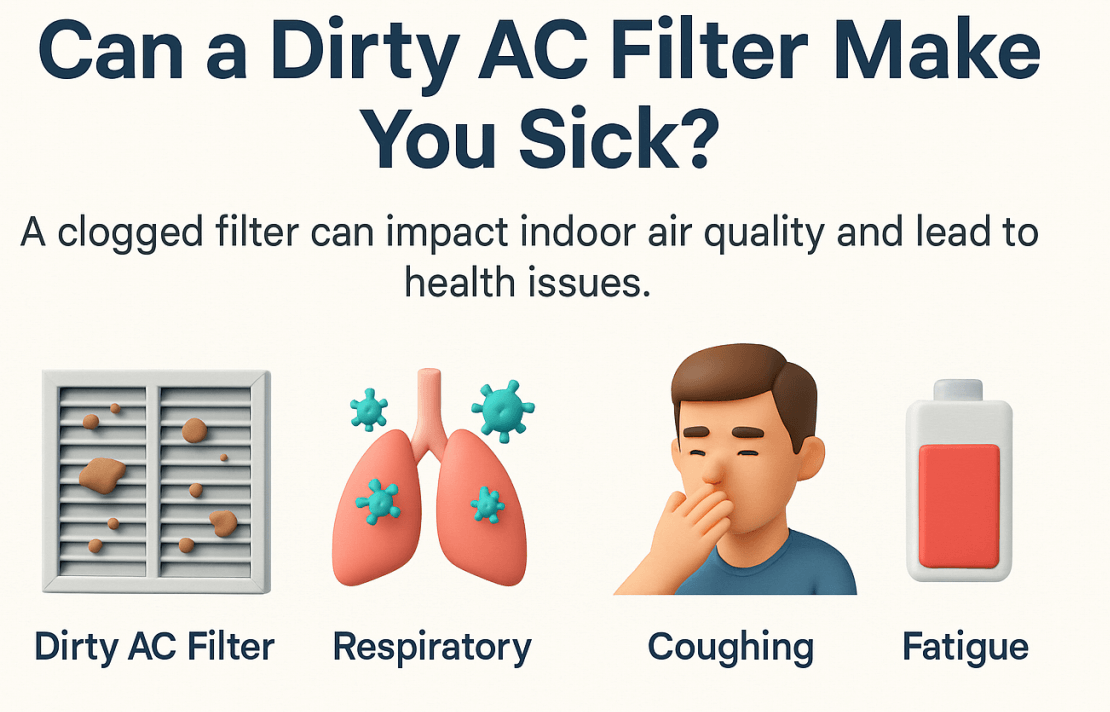
Can a dirty AC filter make you sick? After years of servicing HVAC systems in real homes, our team at ShiftHVAC.com can confidently say the answer is yes—and often in ways that catch families by surprise. We’ve seen everything from chronic allergy flare-ups caused by dust-packed filters to persistent fatigue in households where airflow was so restricted that clean air simply couldn’t circulate.
What most homeowners don’t realize is that a dirty filter isn’t just an HVAC maintenance issue—it’s a health risk multiplier. When filters are clogged, they stop trapping allergens, mold spores, and fine particles, leaving them to cycle back through your living space. Over time, this can quietly impact your respiratory health, energy levels, and even sleep quality.
In this guide, we’ll share the red flags we’ve observed firsthand, explain why indoor air can sometimes become more polluted than outdoor air, and offer field-tested tips you can use right away to restore healthier airflow. By the end, you’ll see exactly how proactive filter maintenance protects not just your system—but your family’s well-being.
Top Takeaways
- Dirty filters affect health – allergies, coughing, fatigue, and poor sleep.
- Indoor air can be worse than outdoors – dust, dander, and mold recirculate.
- Watch for warning signs – odors, weak airflow, worsening symptoms.
- Filter quality matters – MERV 13+ (if system supports) traps fine particles.
- Replace regularly – every 1–3 months for healthier air and system life.
Table of Contents
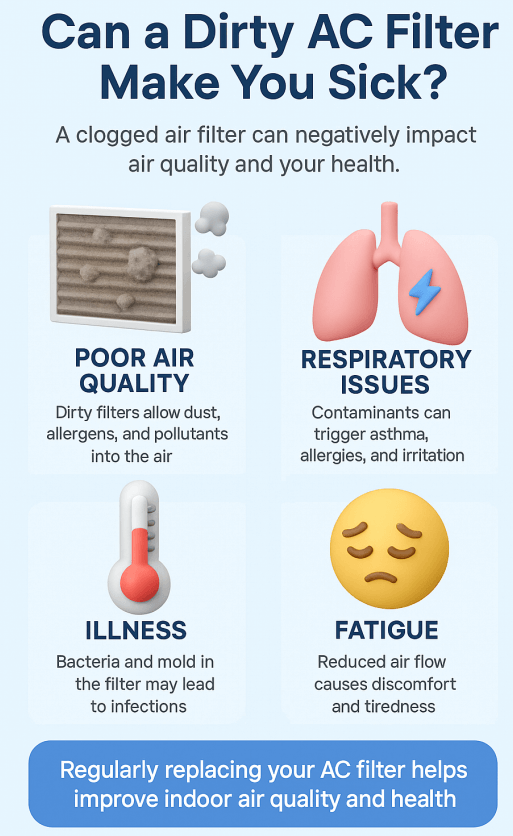
A dirty AC filter doesn’t just strain your HVAC system—it can directly impact your health. When filters clog with dust, pollen, pet dander, or even mold, they stop trapping harmful particles and instead push them back into the air you breathe. Over time, this can create a cycle of poor indoor air quality that many homeowners overlook.
Common Signs and Symptoms:
- Allergy flare-ups: Sneezing, itchy eyes, or congestion that seems worse indoors.
- Respiratory issues: Persistent coughing, wheezing, or aggravated asthma.
- General fatigue: Feeling tired or sluggish due to reduced oxygen circulation.
- Odors and stuffiness: Musty or stale air that doesn’t feel fresh, even with the AC running.
Expert Tips to Protect Your Air Quality:
- Replace filters every 1–3 months, depending on pets, allergies, and usage.
- Choose a filter with the right MERV rating for your needs—higher ratings catch finer particles, but must match your system’s capacity.
- Watch for warning signs: visible dirt on filters, weak airflow, or sudden health changes at home.
- Consider an air quality monitor to track pollutants and spot problems early.
By staying ahead of filter changes, you not only extend the life of your HVAC system but also reduce the risk of illness caused by dirty indoor air. Clean filters mean cleaner lungs, fresher spaces, and healthier days.
“In our years of HVAC service, we’ve seen how often families blame seasonal allergies or stress for their symptoms—when in reality, a clogged AC filter was the hidden culprit. Once replaced, many notice immediate relief. Clean air isn’t just about comfort; it’s a frontline defense for your health.” – ShiftHVAC.com Air Quality Team
Case Study & Real-World Examples
- Family with “Allergies”
- Parents blamed seasonal pollen.
- Inspection revealed a filter clogged with dust, dander, and pollen.
- After replacement, symptoms eased within days.
- Kids finally slept through the night—air quality, not allergies, was the issue.
- Parents blamed seasonal pollen.
- The “Sick Building”
- Office workers complained of fatigue, headaches, and a scratchy throat.
- Management assumed job stress.
- The HVAC filter was packed with mold and dust, choking airflow.
- Higher-MERV filter + regular schedule restored comfort and productivity.
- Office workers complained of fatigue, headaches, and a scratchy throat.
- What Data Confirms
- EPA: Indoor air can be 2–5x more polluted than outdoor air.
- Our field tests back this up: neglected filters = higher contaminant levels.
- Lesson: a filter isn’t just maintenance—it’s your home’s first health defense.
- EPA: Indoor air can be 2–5x more polluted than outdoor air.
Supporting Statistics & Insights
- Most of Life Is Spent Indoors
- Americans spend ~90% of their time inside (EPA/NIEHS).
- Our experience: dirty filters = daily exposure to dust, pollen, and pollutants.
- Americans spend ~90% of their time inside (EPA/NIEHS).
- Indoor Air Often Worse Than Outdoor
- Pollutant levels can be 2–5x higher indoors (EPA).
- We’ve tested homes with neglected filters showing worse air than outside.
- Pollutant levels can be 2–5x higher indoors (EPA).
- Filter Quality Makes a Difference
- MERV 13+ filters capture fine particles, even virus-sized (ASHRAE).
- We’ve seen upgrades lead to less dust, easier breathing, and healthier airflow.
- MERV 13+ filters capture fine particles, even virus-sized (ASHRAE).
- Mold + Dampness = Health Risks
- Studies link indoor mold and dampness to allergies and respiratory issues (NIEHS).
- First-hand: clogged filters raise humidity → mold growth → more coughs and congestion.
- Studies link indoor mold and dampness to allergies and respiratory issues (NIEHS).
👉 Key takeaway: The research matches what we see in homes every day—dirty filters don’t just hurt your HVAC system, they quietly affect your health.
Final Thought & Opinion
- Yes—a dirty AC filter can make you sick.
What seems like simple allergies or fatigue often ties back to clogged filters. - What we’ve seen in the field:
- Families living with months of congestion or headaches.
- Immediate relief once filters were replaced.
- Indoor air issues are often overlooked until symptoms worsen.
- Families living with months of congestion or headaches.
- Key perspective:
- A filter isn’t just HVAC maintenance—it’s a health safeguard.
- Clean filters protect your system and your family.
- It’s one of the simplest, most affordable ways to improve daily health.
- A filter isn’t just HVAC maintenance—it’s a health safeguard.
👉 Bottom line: Treat your AC filter as the first line of defense for your home’s air. Fresh filters = cleaner lungs, fresher spaces, healthier days.
Frequently Asked Questions
Can a dirty AC filter really make you sick?
Yes. A clogged filter can circulate dust, mold spores, pollen, and other pollutants, leading to allergies, asthma flare-ups, headaches, and fatigue.
What are the symptoms of a dirty AC filter?
Common signs include sneezing, coughing, irritated eyes, musty odors, worsening asthma, and feeling tired or congested at home.
How often should I change my AC filter?
Most homes should replace filters every 1–3 months. Homes with pets, allergies, or heavy system use may need more frequent changes.
What type of AC filter is best for health?
Filters with a MERV rating of 8–13 capture most dust, pollen, and allergens. For finer particles (like smoke or bacteria), MERV 13+ may be best if your system supports it.
Can cleaning or replacing my filter improve indoor air quality quickly?
Yes. Many families notice fresher air, easier breathing, and reduced allergy symptoms within days of replacing a dirty filter.